Chronicle
Chronology of carnival in Raesfeld — from neighbourhood festivals to the Rosenmontagszug.
Milestones
- 1867
Last carnival of the Freiheiter neighbourhood
From then on, the forty-hour prayer replaces carnival days. In July the first marksmen’s festival follows.
- 1953
A merry coffee circle on Brökerstegge
War widow Käthe Heyng invites neighbour women — carnival quietly returns to Raesfeld.
- 1954
First fools’ hat festival of Sängerlust
The men’s choir launches the festival of the year for Raesfeld’s fools.
- 1963
First prince and princess of Brökerstegge
Alois Elsner and Lene Gesing — still without session carnival or a parade.
- 1969
First big carnival session
Teacher Gerd Fischer chairs the session at Saal Tiegler — start of a new era.
- 1970
First Raesfeld prince and princess (SGV)
Prince Franz I. (Nießing) and Princess Hilde I. (Ostendorf) make their debut.
- 1971
Small procession at Schwanenhof
Neighbours organise a children’s procession — seed of street carnival.
- 1973
First Rose Monday parade
Birth of the RRZ. Founder and parade coordinator: Hermann Tünte. Children’s float: Norbert Nagel and Petra Gesing.
- 1974
Already 22 floats
22 large floats, as many walking groups, six music groups — a 1.5 km parade.
- 1990
Registered association entry
RRZ enters the register of associations (VR 3524, Borken). Tradition still counts from 1973.
- 2015
42nd Rose Monday parade
Around 1,000 participants thrill the village — the parade stays a crowd magnet.
- 2016
Bröker chronicle
Heinz Bröker finishes his text (“hbr.12/16”). Later years continue via press and club reports.
- 2017
44th Rose Monday parade
Anniversary parade — street carnival keeps going and going.
- 2021
Online Rose Monday parade
The parade is cancelled due to Covid. RRZ organises an online parade — thousands of views.
- 2022
Front-garden parade
Again no street parade. With Luis I. and Carla I., front gardens and entrances are decorated and awarded.
- 2023
50 years of RRZ
Golden jubilee. The Brökerstegge float builders have taken part every year since the 1973 premiere.
- 2026
Motto, route and safety
Dialect motto by Christian Bröker, proven route with family zone, close coordination with police, local authority, DRK and fire brigade.
Chronology of carnival in Raesfeld
by Heinz Bröker
Carnival was already celebrated in Raesfeld more than 150 years ago.
The old neighbourhood festivals
Account by Adalbert Friedrich, in the commemorative publication: 100 years of the Allgemeiner St. Johannis Bürgerschützenverein Raesfeld. 1867 – 1967
Pastor Pentrup, born on 12 December 1815 in Lüdinghausen, served as curate in Ahaus for 22 years after his ordination and became parish priest of Raesfeld in 1864.
Among the pastoral tasks he took on was certainly curbing the excesses of the annual Shrovetide celebrations — above all the heavy consumption of alcohol. The Shrovetide festivities in the village, in the Schlossfreiheit, on the Brink and in the other Hööken were the yearly neighbourhood festivals. On those three “dullen Dagen” things were lively, and even the older folk were ready for jokes and fun. On Shrove Monday noisy bands went from house to house to fetch the best Mettwurst — if need be with the help of a stable lantern — from behind the “Boosenkleid” in the “Fieme”.
The Freiheiter neighbourhood celebrated for the last time over Shrovetide on 27 February 1867. From then on carnival was a thing of the past. In the days before Ash Wednesday the Forty Hours’ Devotion took place instead. On Monday, 22 July 1867, work rested in the fields and workshops. It was the day of the first Schützenfest.
Return in the 1950s
In the 1950s carnival returned to Raesfeld.
Rosenmontag, 16 February 1953: war widow Käthe Heyng, a Rhineland character born in Cologne, was a lodger with Hermann and Paula Höing in Brökerstegge. She had invited the neighbourhood women for coffee. Homemade liqueur and simple vermouth went round. Colourful paper napkins were tied into their hair, and they sang and swayed together.
In 1956 the men joined in. The first princely couple in Brökerstegge was crowned with Alois Elsner and Lene Gesing in 1963 — at a time when there was still neither session carnival nor a Rosenmontagszug.
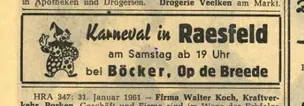
In February 1954 the men’s choir Sängerlust Raesfeld held its first Kappenfest. Until carnival 1969 it was the event of the year for Raesfeld’s fools. On 10 February 1961, Gaststätte Böcker, Op de Breede, advertised “Karneval in Raesfeld” in the newspaper.
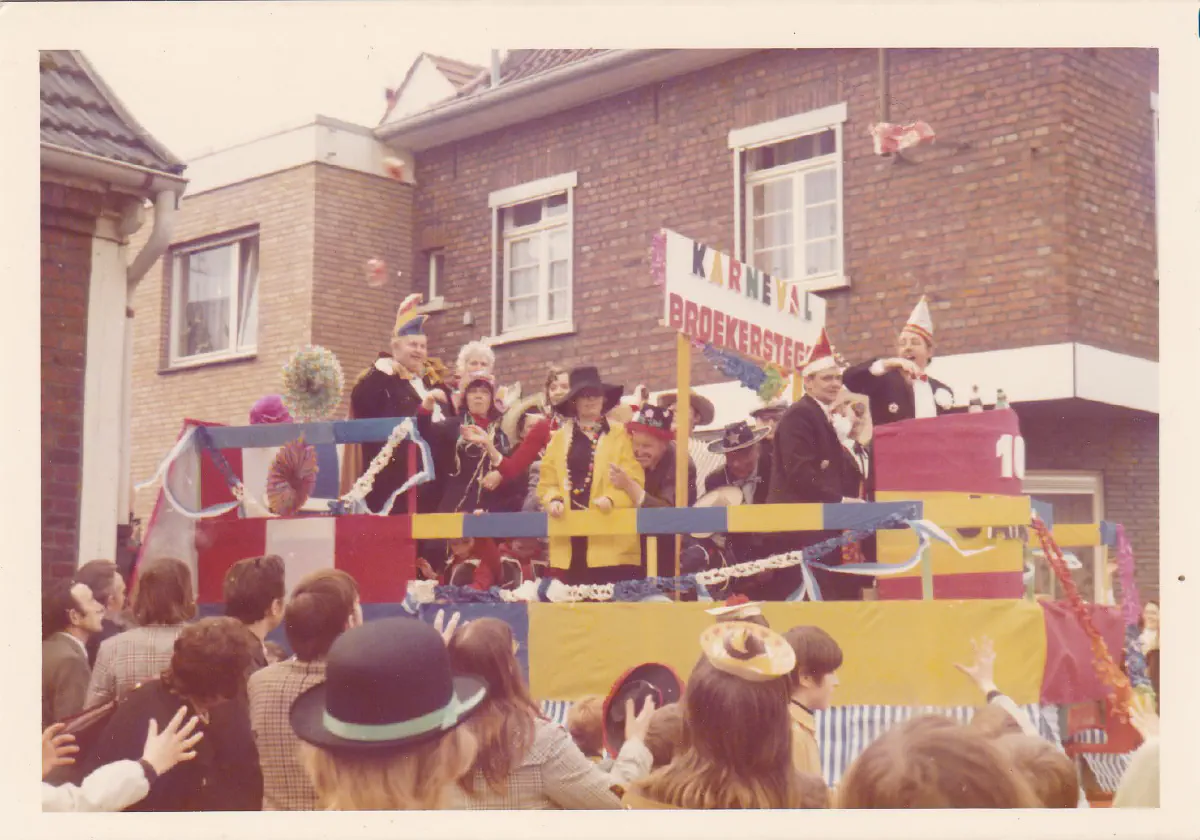
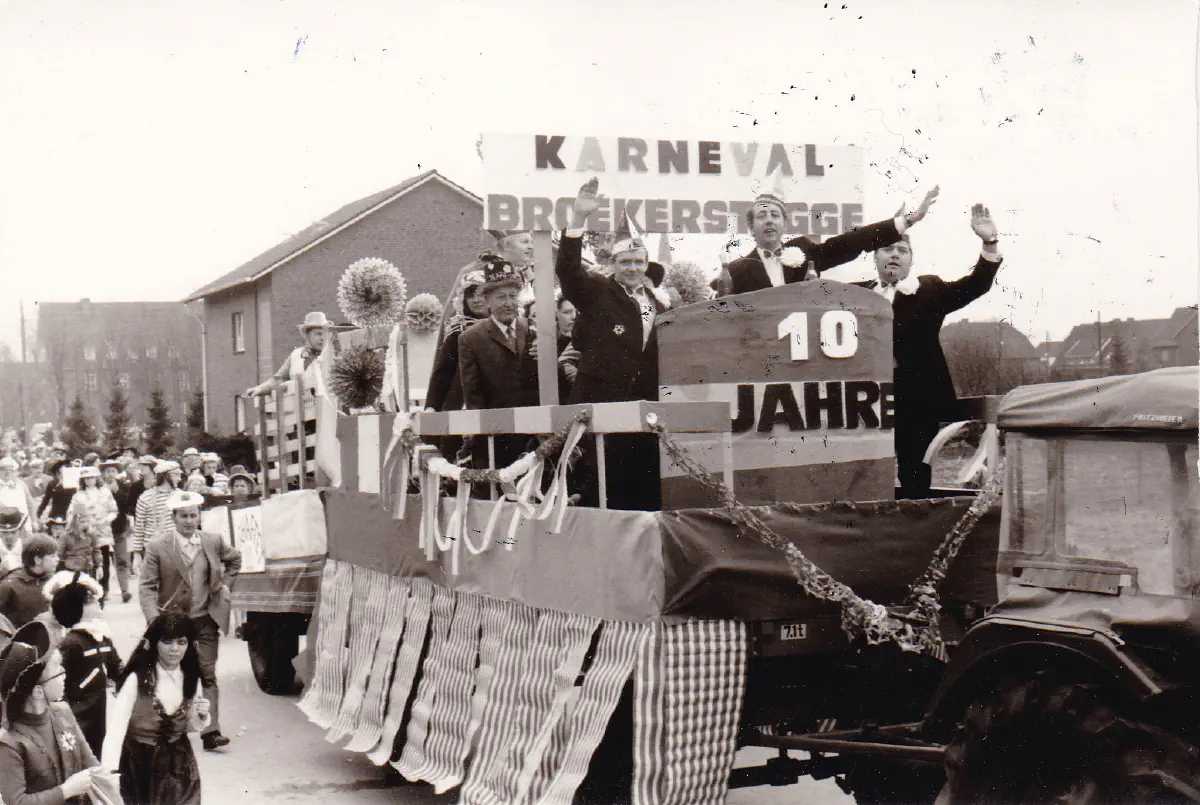
When the first Rosenmontagszug set off in 1973, Brökerstegge was there immediately and has taken part with a themed float ever since, without interruption.
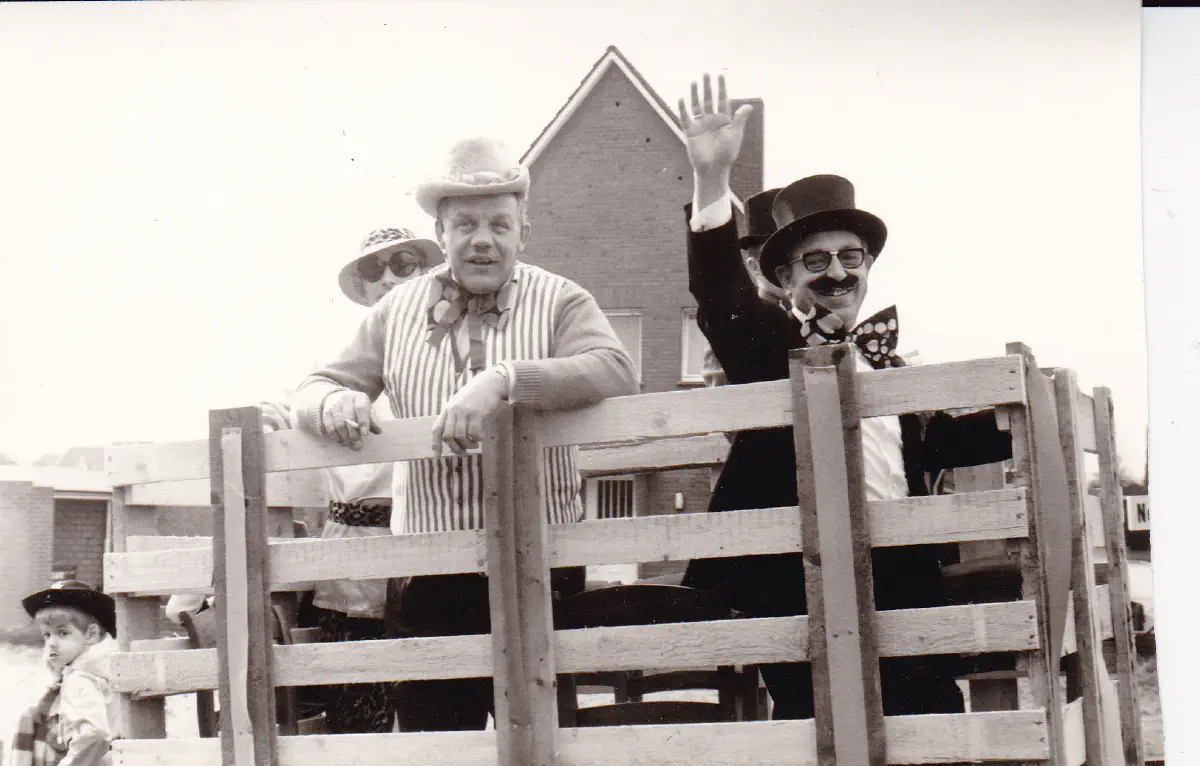
Session carnival from 1969
On Sunday, 8 February 1969, the first large public fool’s session opened in Saal Tiegler. The initiator was teacher Gerd Fischer. That evening began a new era in Raesfeld carnival.
A year later, on Saturday, 27 February 1970, the first large joint carnival session took place. Raesfeld’s first princely couple, Prince Franz I. (Nießing) and Princess Hilde I. (Ostendorf), made a glittering debut that night.
With the joint event of the TSV and the men’s choir, the SGV was founded; today, as the RCV, it continues session carnival.
Birth of the RRZ — 1973
Rosenmontag, 5 March 1973 — the birth of street carnival in Raesfeld.
“Vom Schwanenhof wurde er gegründet, jetzt hat’s im ganzen Dorf gezündet” — that could have been the motto of the first parade. For as early as 1971 the neighbourhood at Schwanenhof had started a tiny procession — to the children’s delight.
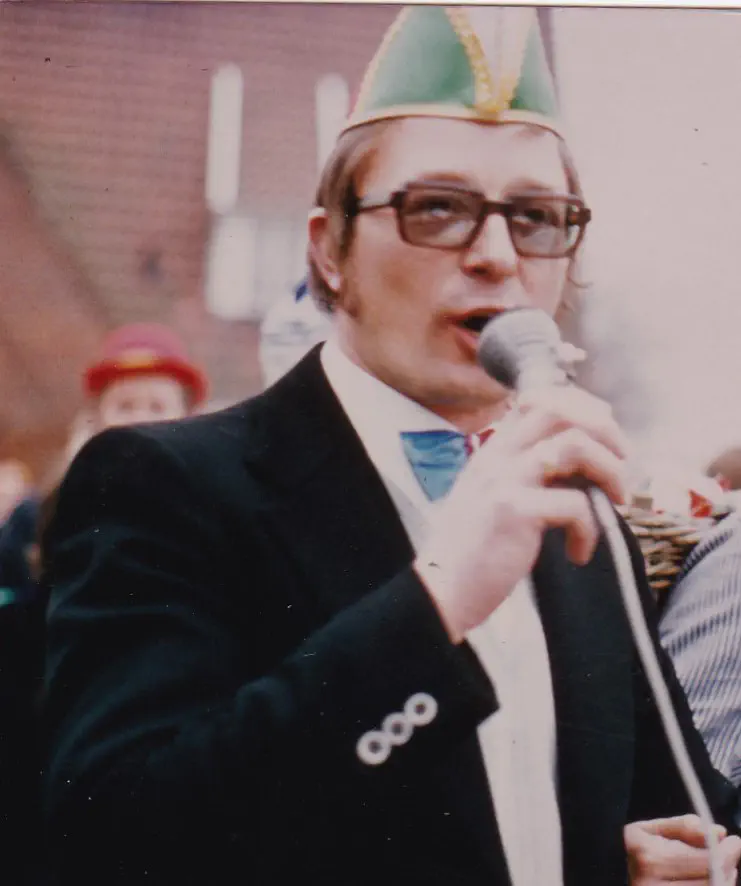
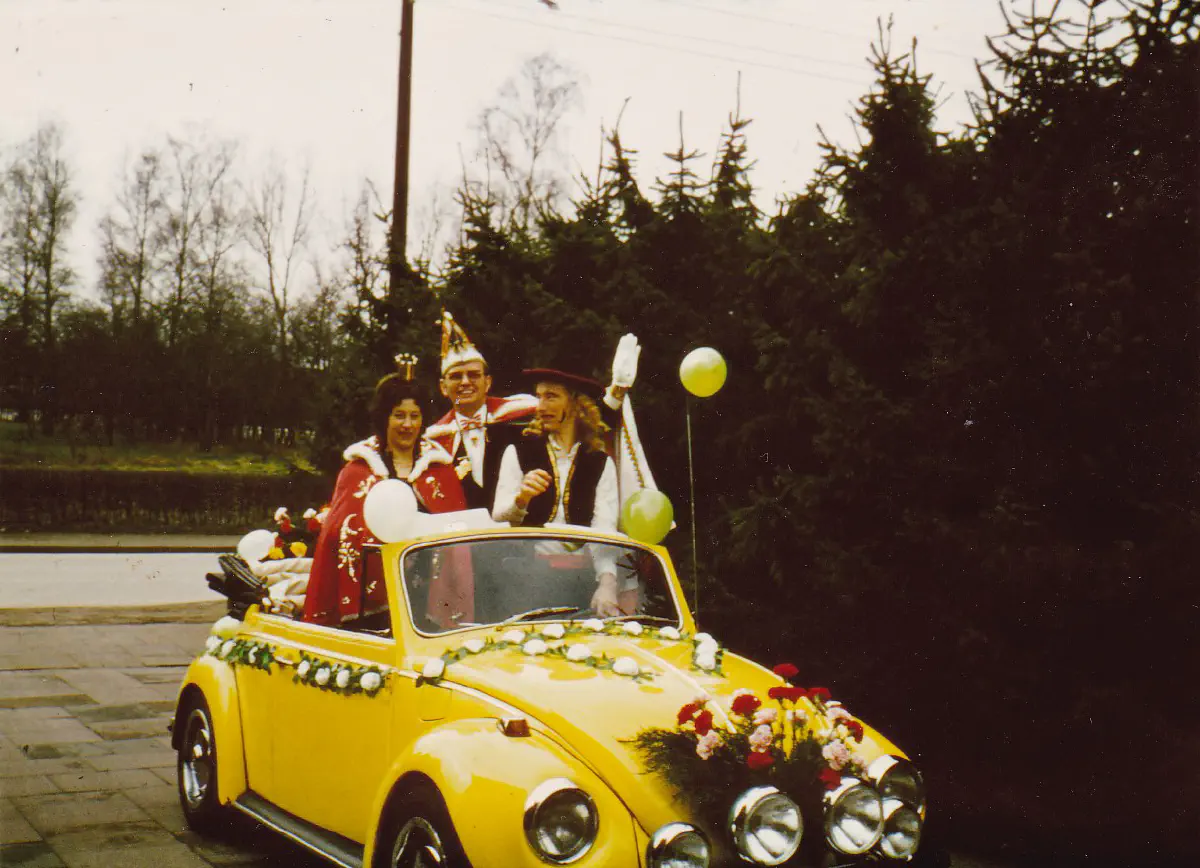
Parade coordinator and RRZ founder Hermann Tünte was more than pleased with the turnout. On the children’s princely float sat Norbert Nagel and Petra Gesing. The SGV princely couple, Willi Hoffmann and Hanne Gudel, threw sweets from an open, bright yellow VW convertible.
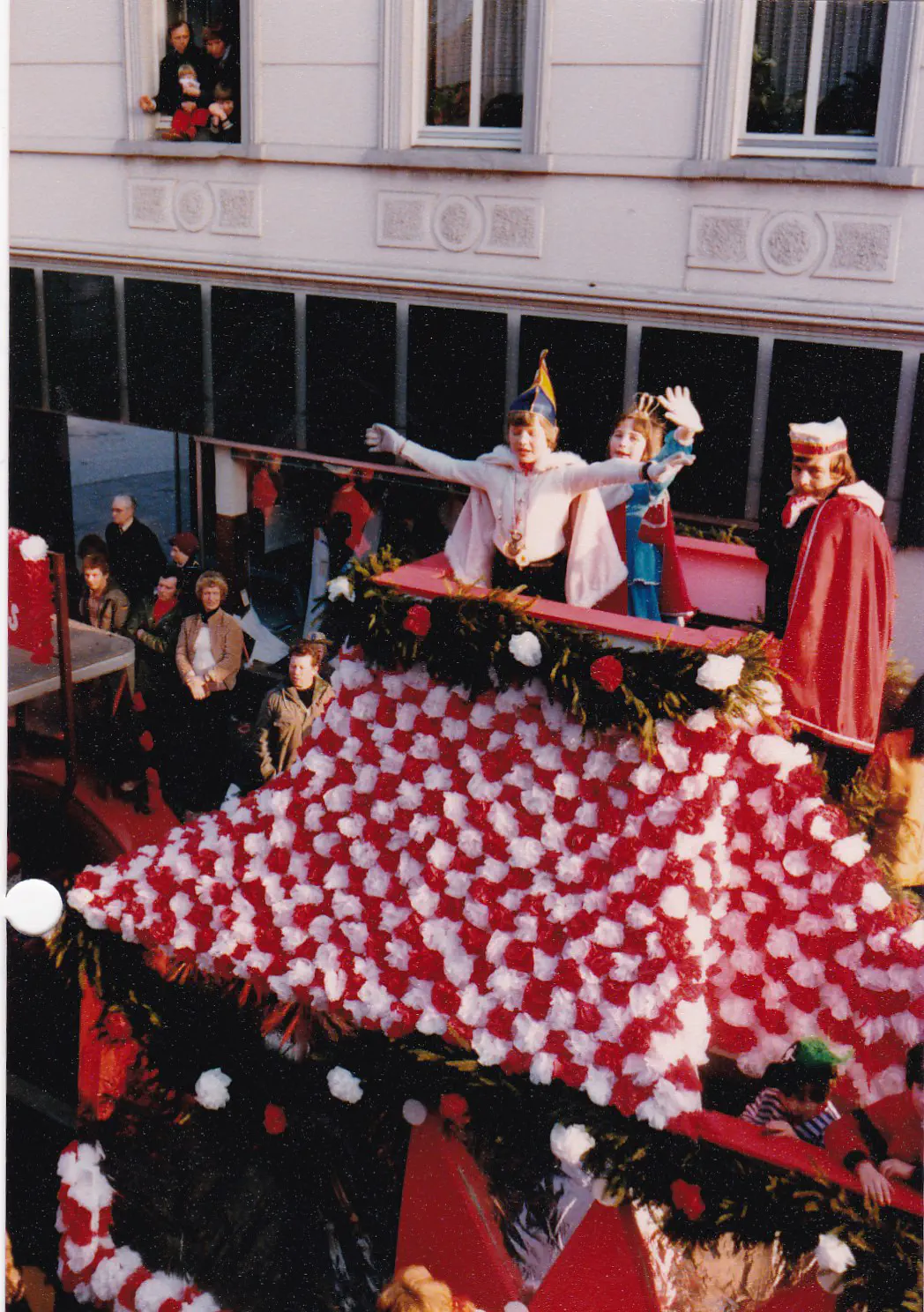
1974 — already a draw
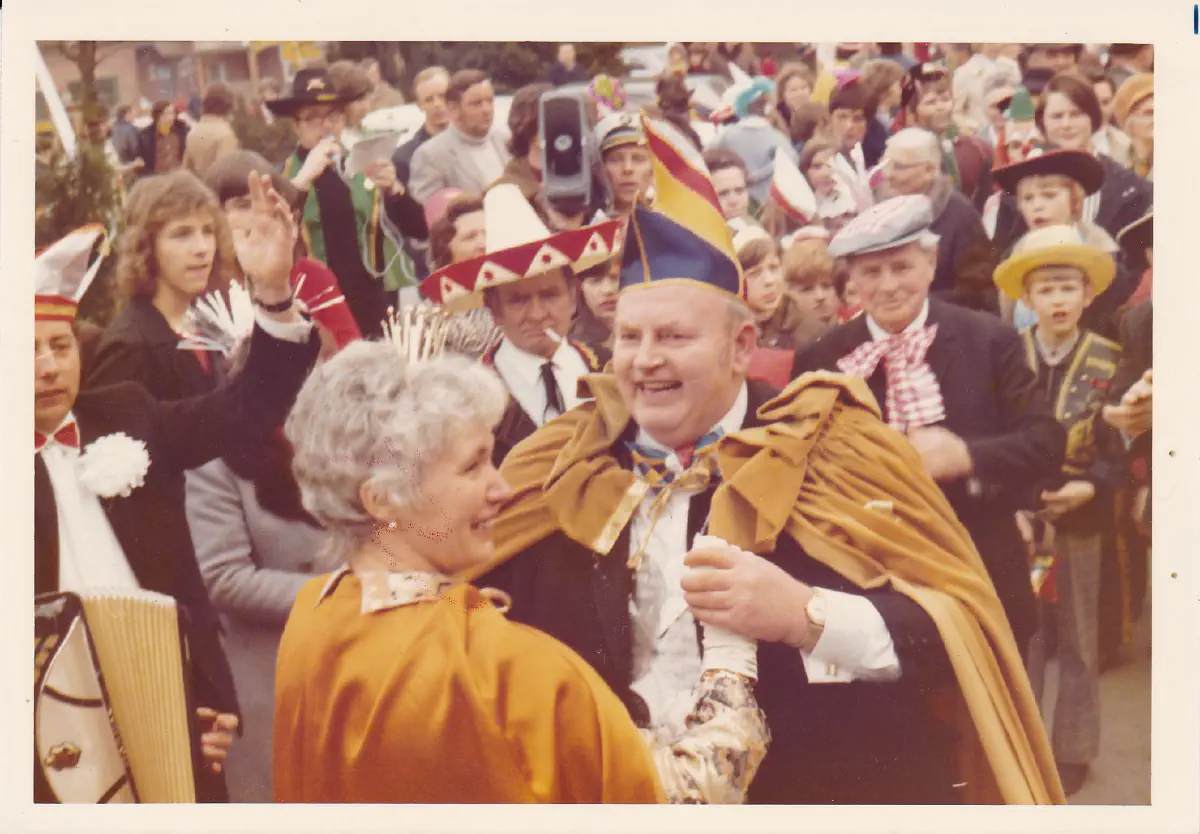
Rosenmontag, 25 February 1974: 22 large carnival floats, as many walking groups and six bands accompanied the 1.5 km procession. What had begun small three years earlier had quickly become a crowd-puller.
And it keeps going …
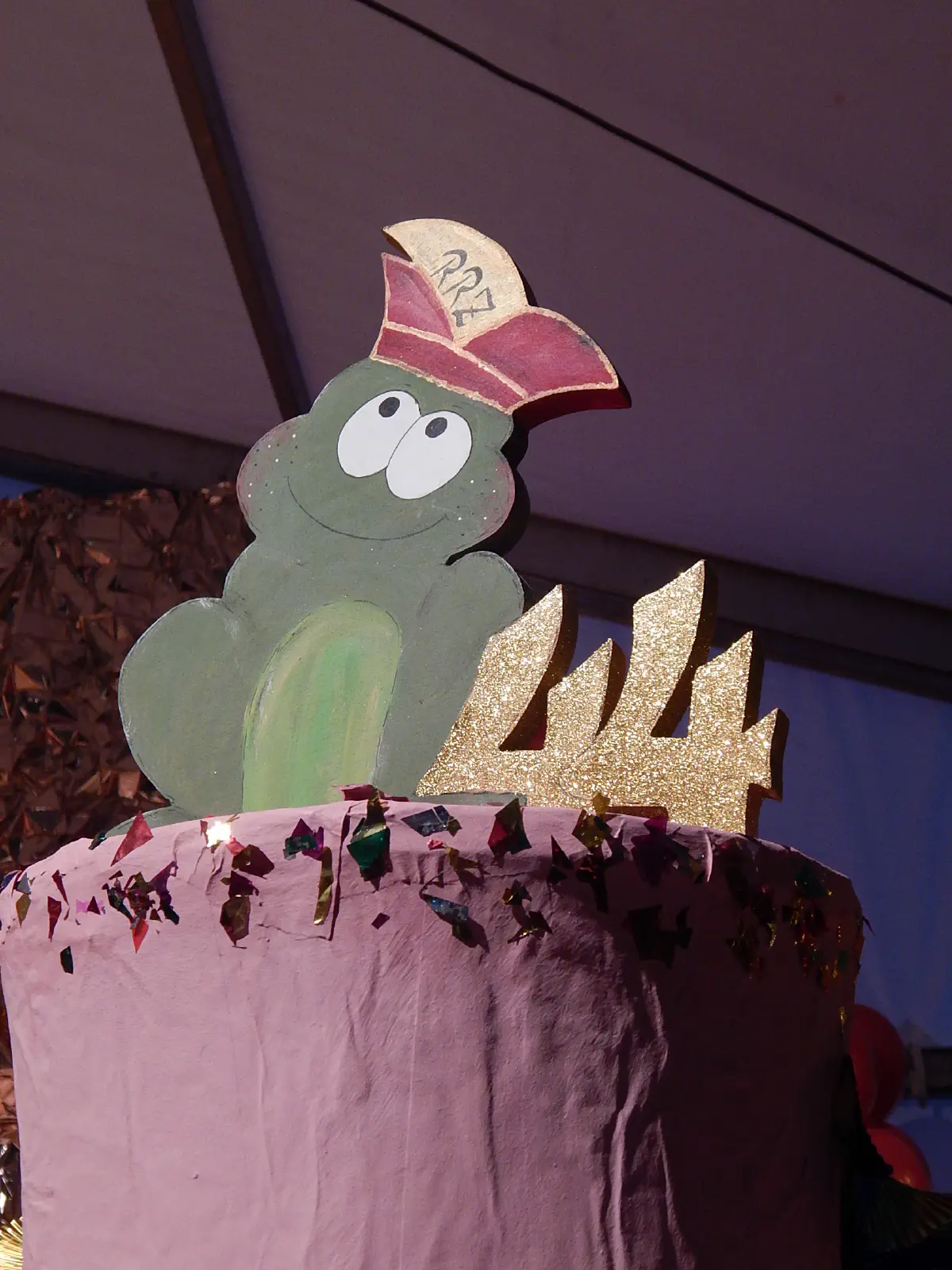
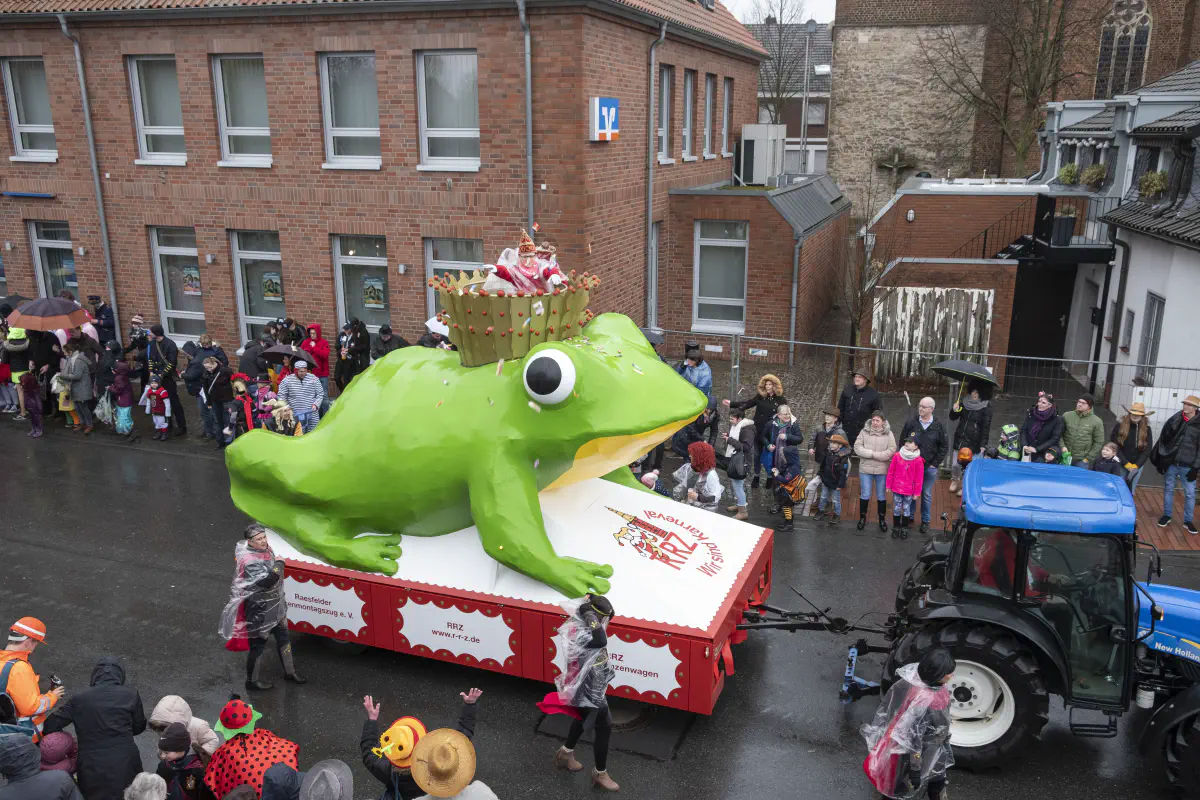
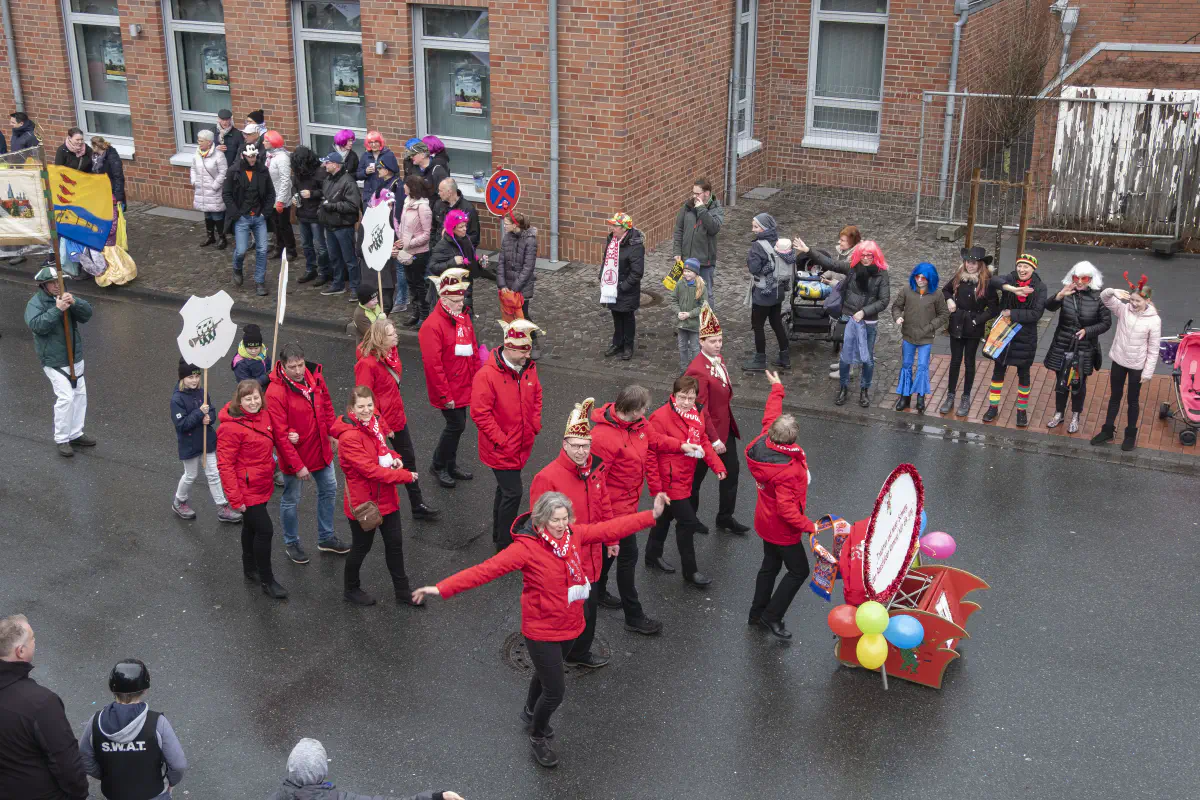
In 2017 the RRZ turned a carnival 44 years old. Let’s borrow a car advert from the 1950s:
It runs, and runs, and runs…
— hbr. 12/16
Continuation after 2016
Bröker’s narrative text ends in 2016. The milestones above continue the line — from club notices and local reporting (including Heimatreport, Borkener Zeitung, Dorstener Zeitung): registered association entry 1990, anniversary parades, the COVID years with an online parade (2021) and a front-garden procession (2022), the 50th anniversary in 2023, and the route and safety concept of 2026.
Still missing: A continuous account of the years 1975–2009 (parade by parade, mottos, boards) is scarcely available on the public web. Individual entries in the princely couple gallery are also incomplete — especially 2003–2006. Anyone with newspaper clippings, club booklets or board corrections: please contact Contact — we are glad to update the chronicle and the gallery.
More links to recent reports: Press.